Skip to content

About EvidenceOS

Built where research, technology and health systems meet.

EvidenceOS develops institution-governed infrastructure connecting biomedical research, clinical intelligence and health-system implementation, beginning with precision neurological medicine.

Our work brings together scientific evidence, quantitative methods, biomedical information and computational technology to support research, clinical technology development and institutional implementation.

Why we exist

More information does not automatically produce better evidence.

Biomedical science can measure ever more aspects of health and disease. Imaging, blood biomarkers, clinical observations, longitudinal measurements and computational models each give a different view.

But the value of more information depends on the question. A measurement may improve one analysis and not another. A model may perform well in one population and fail to generalize to the next. A diagnostic may show analytical performance before its value in practice is established.

Moving from research into clinical use adds a second challenge. Technologies must be evaluated for their intended use, fitted into existing workflows and governed by the institutions responsible for them.

EvidenceOS builds technology for both: scientific investigation and institutional implementation.

From Research to Infrastructure

Built from scientific investigation.

EvidenceOS emerged from years of research into how neurological injuries can be characterized more precisely, how clinical and biological measurements contribute to scientific understanding, and what evidence is required to translate advances in medical technology into clinical practice. That work, by the founder with collaborators at the University of Turku and in the international TBI research community, spans quantitative neuroimaging, multimodal TBI studies, retrospective analyses of clinical data and computational methods.

  1. June 2014
    Quantitative neuroimaging

    The starting point: measuring injury with MRI. A master’s thesis in biomedical imaging at the University of Turku quantified tissue at risk in acute stroke from perfusion and diffusion imaging.

  2. Jan 2020
    Doctoral research, University of Turku

    Doctoral Programme in Clinical Research: quantitative imaging, blood biomarkers and multimodal characterization in TBI.

  3. 2021–2022
    Trust in clinical imaging AI

    Bringing quantitative neuroimaging AI into routine radiology at Combinostics, and learning what clinicians need before they trust it: explainable outputs and validation they can follow.

  4. Jan 2024
    TBIview

    Research software that takes TBI data from ingestion and cleaning to modelling and statistics, presented at the InTBIR General Assembly in Bethesda.

  5. Sept 2024
    First published results

    Five abstracts presented at NeuroTrauma 2024 in Cambridge and published in the Journal of Neurotrauma: what blood biomarkers add, how outcome can be modelled, and how rarely data types are combined.

  6. Today
    EvidenceOS

    EvidenceOS Research and connected infrastructure for reproducible biomedical research, clinical intelligence and institutional implementation.

Leadership and scientific expertise

The people building EvidenceOS.

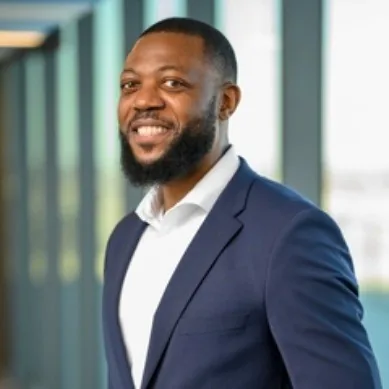
Peter Ngum
FOUNDER & CHIEF EXECUTIVE OFFICER

Peter Ngum

Peter founded EvidenceOS to turn a decade of quantitative neuroimaging and neurotrauma research into infrastructure institutions can govern. A Doctoral Researcher at the University of Turku, he works on quantitative imaging, blood biomarkers and multimodal characterization in traumatic brain injury, with a focus on uncertainty and reproducible methods, and previously worked on medical imaging AI at Combinostics. At United Nations Headquarters in June 2026, he set out EvidenceOS’s case for sovereign AI in health: institutions must keep the authority and capability to govern the AI they depend on.
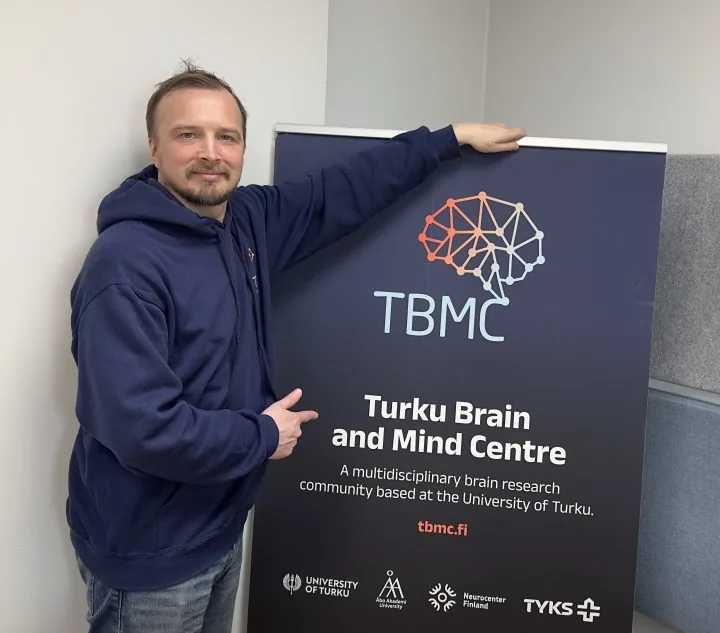
Harri Merisaari
CHIEF TECHNOLOGY OFFICER

Harri Merisaari

Director of the Turku Brain and Mind Center and Adjunct Professor of Medical Image Analysis at the University of Turku, where he is a senior researcher in the FinnBrain Neuroimaging Lab. His work in quantitative medical imaging spans image-analysis methods and large clinical imaging datasets. He leads EvidenceOS’s technology development.

Scientific and clinical advisers
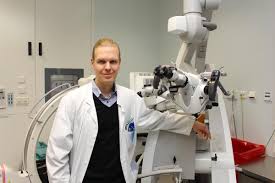
Professor Olli Tenovuo
Professor Olli TenovuoFOUNDING CLINICAL ADVISER · PHD SUPERVISOR

Finland’s first Professor of Neurotraumatology, at the University of Turku. Since 1996 he has led a multidisciplinary TBI research group, now more than 40 researchers, on blood biomarkers, brain imaging and prognostic modelling, and he led the Turku Brain Injury Centre from its establishment until 2022. His 2015 question about evidence-based medicine for individual patients with TBI frames the scientific direction EvidenceOS works in.

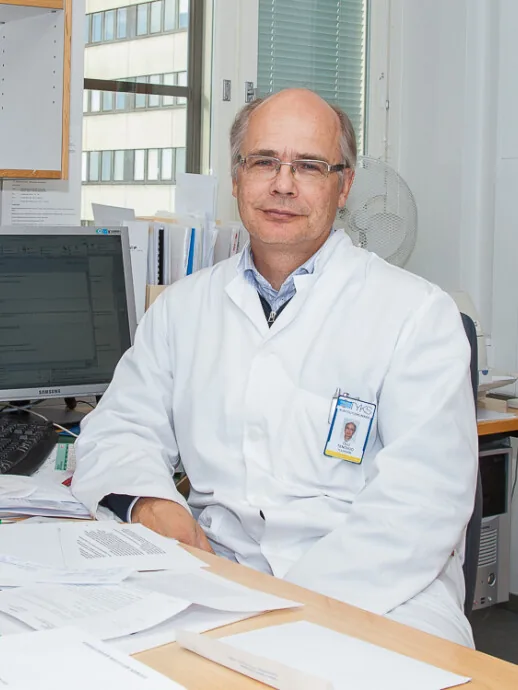
Jussi Posti
Jussi PostiCLINICAL ADVISER · PHD SUPERVISOR

Consultant neurosurgeon and Adjunct Professor of Neurosurgery at the University of Turku, and head of the Turku Brain Injury Centre since 2022. At Turku University Hospital he also heads neurosurgery and brain trauma and rehabilitation.

How we work

Scientific rigor. Institutional authority. Practical implementation.

  1. 01Evidence before claims

    Every result comes with its methods, data and limits.

  2. 02Reproducibility by design

    Methods, data definitions and runs are recorded so work can be repeated and extended by others.

  3. 03Institutional authority

    Institutions decide what their information is used for, which technologies they trust and when to replace them.

  4. 04Technology independence

    The infrastructure is designed to work with the models and tools an institution chooses, including ones EvidenceOS did not build.

  5. 05Implementation matters

    A promising result has to fit the people, workflows, resources and accountability of the institution using it.

Work with EvidenceOS

What does your institution need to investigate, evaluate or implement?

We work with research institutions, biomedical technology developers, life sciences organizations and health systems.